


THE STEPHEN B. KLEIN FACULTY OF |AEROSPACE ENGINEERING
About the |Faculty
The Stephen B. Klein Faculty of Aerospace Engineering at the Technion is a world-class academic hub for aeronautics and astronautics, dedicated to creating, expanding, and disseminating ideas and knowledge in aerospace sciences and engineering.
BE PART OF THE |AEROSPACE FUTURE
News

08.02.2026
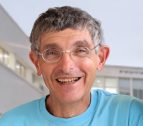
Professor Eli Livne Awarded the 2026 Hanin International Prize
The late Prof. Meir Hanin International Prize is awarded every two years for significant scientific and/or technological achievements in aerospace sciences.
01.01.2026
Announcing the appointment of the new Dean, Prof. Gil Iosilevskii
The Stephen B. Klein Faculty of Aerospace Engineering is pleased to announce a leadership transition.

12.11.2025
Professor Emeritus Dan Givoli has been selected as the 2026 Timoshenko Scholar at Stanford University
The Timoshenko Scholar is a prestigious award presented annually in recognition of outstanding contributions to the field of applied mechanics.
Events
AE Rocks! Super-talented faculty members and students will play and sing at the 6th Annual Faculty Concert.
Seminars
Roee M. Francos is currently a Computer Science Postdoctoral Fellow at the Robotics, Embedded Autonomy, and Communication Theory (REACT) Lab at Harvard University focusing on development of multi-agent resilient decision-making and coordination algorithms. In 2023, he completed his PhD in Computer Science at the Multi-Agent Robotic Systems Laboratory, the Technion-Israel Institute of Technology. He received the B.Sc. in Electrical and Computer Engineering from Ben-Gurion University. His research interests are in multi-agent teamwork, autonomous robotics, intelligent transportation systems, bio-inspired robotics and computer vision, focusing on collaborative algorithms for motion planning of autonomous vehicles, multi-robot learning, and air traffic management and coordination of unmanned vehicles. Roee is a recipient of the 2023 Robotics Science and Systems (RSS) Pioneers Award and the 2025 IEEE Multi-Robot & Multi-Agent Systems (MRS) Young Pioneer Award.
Pavel Galich | B.Sc. and M.Sc. in Applied Mathematics and Physics, Department of Aerophysics and Space Research, Moscow Institute of Physics and Technology (2012 and 2014). Ph.D. in Aerospace Engineering, Technion (2018). Postdoctoral Research Associate, Department of Materials Science & NanoEngineering (MSNE), Rice University (2018-2020). Assistant Professor at the Technion since 2020.
Sun
Mon
Tue
Wed
Thu
Fri
Sat
S
M
T
W
T
F
S
29
31
1
2
3
4
5
6
7
8
9
10
11
12
13
14
15
16
17
18
19
20
21
22
23
24
25
26
27
28
30
1
2
- Today
- Event
For more info
Please fill in the details
"*" indicates required fields
*required fields are marked with an asterisk