


Contact Us

THE STEPHEN B. KLEIN FACULTY OF |AEROSPACE ENGINEERING

Propelling the Future

Research Labs

REGISTER to IACAS 2026

Graduate Studies

Industry Relations

About the |Faculty

The Stephen B. Klein Faculty of Aerospace Engineering at the Technion is a world-class academic hub for aeronautics and astronautics, dedicated to creating, expanding, and disseminating ideas and knowledge in aerospace sciences and engineering.

BE PART OF THE |AEROSPACE FUTURE

News

08.02.2026

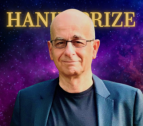
Professor Eli Livne Awarded the 2026 Hanin International Prize

The late Prof. Meir Hanin International Prize is awarded every two years for significant scientific and/or technological achievements in aerospace sciences.
01.01.2026

Announcing the appointment of the new Dean, Prof. Gil Iosilevskii

The Stephen B. Klein Faculty of Aerospace Engineering is pleased to announce a leadership transition.
12.11.2025

Professor Emeritus Dan Givoli has been selected as the 2026 Timoshenko Scholar at Stanford University

The Timoshenko Scholar is a prestigious award presented annually in recognition of outstanding contributions to the field of applied mechanics.
Events
March 25 2026
RAFAEL will present their Aerospace related activities.
April 29 2026
AE Rocks! Super-talented faculty members and students will play and sing at the 6th Annual Faculty Concert.
May 20 2026
The students’ annual event
Seminars
February 11 2026
Kirill Reznik received his first degree in Mechanical Engineering with a specialization in rocket launch systems from Bauman Moscow State Technical University. He is currently completing his MSc in Aerospace Engineering at the Technion, where his research focuses on cooperative missile guidance under the supervision of Prof. Tal Shima.
March 09 2026
Dr. Liraz Mudrik is currently a Postdoctoral Fellow in the Department of Mechanical and Aerospace Engineering at the Naval Postgraduate School. He received his Ph.D. in Aerospace Engineering (direct track) from the Technion–Israel Institute of Technology in 2023, where he also earned his B.Sc. (cum laude).
Sun
Mon
Tue
Wed
Thu
Fri
Sat
S
M
T
W
T
F
S
31
2
4
5
6
7
9
11
12
13
14
15
16
18
19
20
21
22
23
24
25
26
27
28
29
30
1
2
3
4
Long-term satellite formation keeping must account for the effects of orbital perturbations. While long-term formation keeping around the Earth has been thoroughly studied, lunar formations are yet to be further...
We study dipolophoretic (DIP), i.e. the combined induced – charge electrophoretic (ICEP) and dielectrophoretic (DEP) interactions between a pair of identical conducting circular cylindrical particles suspended in an unbounded electrolyte...
Shaping the trajectory of an interceptor is crucial for numerous reasons, including the ability to take into account environmental factors and countermeasures. Moreover, we gain the ability to specify the...
The mathematical theory of nonlinear cooperative control relies heavily on notions from graph theory and passivity theory. A general analysis result is known about cooperative control of maximally equilibrium-independent passive systems, relating steady-states of...
Events on 01/04/2019
Long-term satellite formation keeping must account for the effects of orbital perturbations. While long-term formation keeping around the Earth has been thoroughly studied, lunar formations are yet to be further...
Events on 03/04/2019
We study dipolophoretic (DIP), i.e. the combined induced – charge electrophoretic (ICEP) and dielectrophoretic (DEP) interactions between a pair of identical conducting circular cylindrical particles suspended in an unbounded electrolyte...
Events on 08/04/2019
It has been recognized since the pioneering experiments of Reynolds in 1883 that surface roughness plays a significant role in the dynamics of shear layers. This is a classical problem...
Events on 10/04/2019
Shaping the trajectory of an interceptor is crucial for numerous reasons, including the ability to take into account environmental factors and countermeasures. Moreover, we gain the ability to specify the...
Events on 17/04/2019
The mathematical theory of nonlinear cooperative control relies heavily on notions from graph theory and passivity theory. A general analysis result is known about cooperative control of maximally equilibrium-independent passive systems, relating steady-states of...
  • Today
  • Event
For more info
Please fill in the details

"*" indicates required fields

This field is for validation purposes and should be left unchanged.
*required fields are marked with an asterisk