


THE STEPHEN B. KLEIN FACULTY OF |AEROSPACE ENGINEERING
About the |Faculty
The Stephen B. Klein Faculty of Aerospace Engineering at the Technion is a world-class academic hub for aeronautics and astronautics, dedicated to creating, expanding, and disseminating ideas and knowledge in aerospace sciences and engineering.
BE PART OF THE |AEROSPACE FUTURE
News
08.02.2026
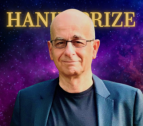
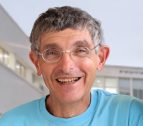
Professor Eli Livne Awarded the 2026 Hanin International Prize
The late Prof. Meir Hanin International Prize is awarded every two years for significant scientific and/or technological achievements in aerospace sciences.
01.01.2026
Announcing the appointment of the new Dean, Prof. Gil Iosilevskii
The Stephen B. Klein Faculty of Aerospace Engineering is pleased to announce a leadership transition.

12.11.2025
Professor Emeritus Dan Givoli has been selected as the 2026 Timoshenko Scholar at Stanford University
The Timoshenko Scholar is a prestigious award presented annually in recognition of outstanding contributions to the field of applied mechanics.
Events
Seminars
Roee M. Francos is currently a Computer Science Postdoctoral Fellow at the Robotics, Embedded Autonomy, and Communication Theory (REACT) Lab at Harvard University focusing on development of multi-agent resilient decision-making and coordination algorithms. In 2023, he completed his PhD in Computer Science at the Multi-Agent Robotic Systems Laboratory, the Technion-Israel Institute of Technology. He received the B.Sc. in Electrical and Computer Engineering from Ben-Gurion University. His research interests are in multi-agent teamwork, autonomous robotics, intelligent transportation systems, bio-inspired robotics and computer vision, focusing on collaborative algorithms for motion planning of autonomous vehicles, multi-robot learning, and air traffic management and coordination of unmanned vehicles. Roee is a recipient of the 2023 Robotics Science and Systems (RSS) Pioneers Award and the 2025 IEEE Multi-Robot & Multi-Agent Systems (MRS) Young Pioneer Award.
Carlos Caravaca Gallego | This work is towards a Ph.D. degree under the supervision of Prof. Pini Gurfiland and Dr. Hector Rotstein
Sun
Mon
Tue
Wed
Thu
Fri
Sat
S
M
T
W
T
F
S
31
2
4
5
6
7
9
11
12
13
14
15
16
18
19
20
21
22
23
24
25
26
27
28
29
30
1
2
3
4
- Today
- Event
For more info
Please fill in the details
"*" indicates required fields
*required fields are marked with an asterisk